Why Is One Room Hotter Than the Rest of the House is a common concern for homeowners and property managers across metro Atlanta. The most useful response begins with the specific symptoms, the building, and the equipment rather than a universal shortcut. This guide explains what may be happening, which basic checks are reasonable, and when professional HVAC service is the safer next step.
Uneven comfort usually has a reason
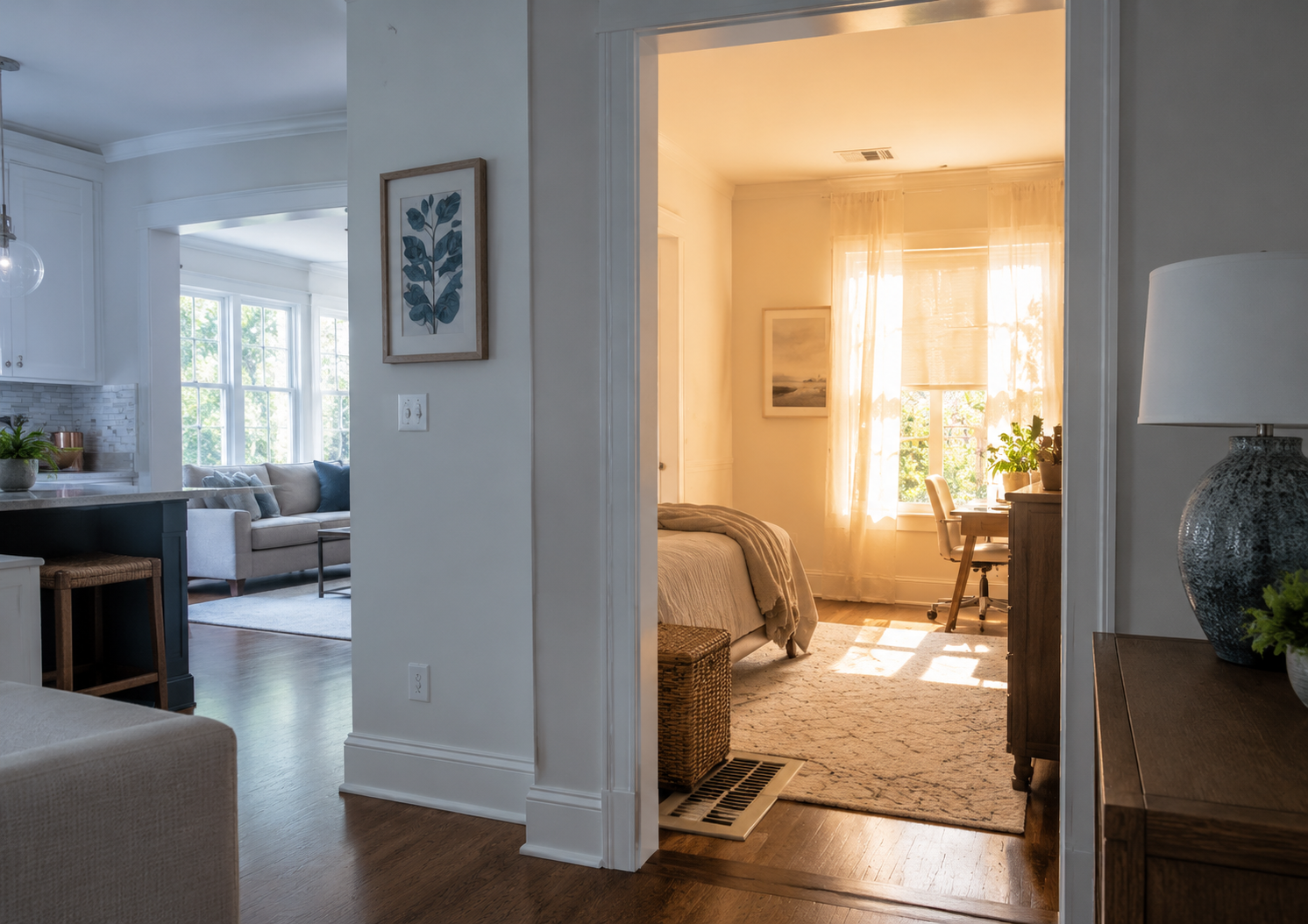
One hot room does not automatically mean the air conditioner is too small. The cause may be a closed or blocked register, inadequate return airflow, a damaged duct, solar heat through windows, poor insulation, air leakage, room location, or an unbalanced duct system. Upstairs rooms and west-facing spaces often experience heavier heat gain during Atlanta afternoons, so patterns and timing provide useful clues.
Atlanta’s weather can shift quickly, and HVAC advice should be based on the property rather than a generic rule. Equipment age, construction, duct design, occupancy, maintenance history, and comfort expectations all change the right answer. When a symptom persists after basic homeowner checks, measurements from a trained technician are more reliable than replacing parts by trial and error.
Begin with simple observations
Confirm that the supply register is open and not covered by furniture or curtains. Check whether the room has a return grille or a clear path for air to flow back toward a central return when the door is closed. Compare airflow at nearby vents and note whether the problem occurs all day or only during sunny hours. A dirty filter can reduce overall airflow, but replacing it will not repair a disconnected branch duct or correct poor distribution.
Before authorizing work, ask for the diagnosis in plain language, the recommended correction, and any alternatives. A reputable contractor should be able to explain what was observed and why the recommendation fits the system. For replacement projects, request the proposed equipment combination, scope of work, warranty information, and any duct, drain, control, or electrical changes that are included.
Ductwork and pressure can be the issue
Leaky, crushed, undersized, or poorly routed ducts can lose conditioned air before it reaches the room. Ducts running through a hot attic face demanding conditions. Closing vents in other rooms to force more air toward the problem space may increase system pressure and create unintended effects. A technician can evaluate airflow, static pressure, duct condition, and balancing options to determine whether adjustment or repair is appropriate.
Atlanta’s weather can shift quickly, and HVAC advice should be based on the property rather than a generic rule. Equipment age, construction, duct design, occupancy, maintenance history, and comfort expectations all change the right answer. When a symptom persists after basic homeowner checks, measurements from a trained technician are more reliable than replacing parts by trial and error.
The building envelope matters too
Air leaks, limited attic insulation, unshaded windows, and heat-producing electronics can add more load than the room’s airflow can handle. Window coverings, air sealing, and insulation improvements may help when heat gain is the main driver. If a room was added or its use changed, the original system may never have been designed for the new load. In that case, duct modification, zoning, or a ductless solution may be worth considering.
Before authorizing work, ask for the diagnosis in plain language, the recommended correction, and any alternatives. A reputable contractor should be able to explain what was observed and why the recommendation fits the system. For replacement projects, request the proposed equipment combination, scope of work, warranty information, and any duct, drain, control, or electrical changes that are included.
Choose a solution based on measurement
Avoid replacing the entire HVAC system solely because of one uncomfortable room. Start with a service evaluation that considers system performance, ducts, returns, room load, and controls. The best fix might be as simple as repairing a duct or improving return airflow, or it may involve a more deliberate comfort upgrade. Air Systems Sales & Service can help Atlanta property owners identify the actual source of uneven temperatures before recommending equipment.
Atlanta’s weather can shift quickly, and HVAC advice should be based on the property rather than a generic rule. Equipment age, construction, duct design, occupancy, maintenance history, and comfort expectations all change the right answer. When a symptom persists after basic homeowner checks, measurements from a trained technician are more reliable than replacing parts by trial and error.
Talk with Air Systems Sales & Service
For HVAC installation, repair, or preventive maintenance in the Atlanta area, contact Air Systems Sales & Service or call (770) 377-3234. The family-owned company has served Georgia since 1995 and works with residential and commercial heating and cooling systems.
Stay Comfortable Year-Round
Contact Air Systems Sales & Services, Inc. for expert heating, cooling, and maintenance services that keep your home or business running smoothly!
Why Choose Us

Fast and Efficient Service

25+ Years of Expertise

Lower Energy, Lower Costs
Discover the Difference
Learn more about Air Systems Sales & Services, Inc. and how our trusted HVAC solutions can enhance your comfort and efficiency today!