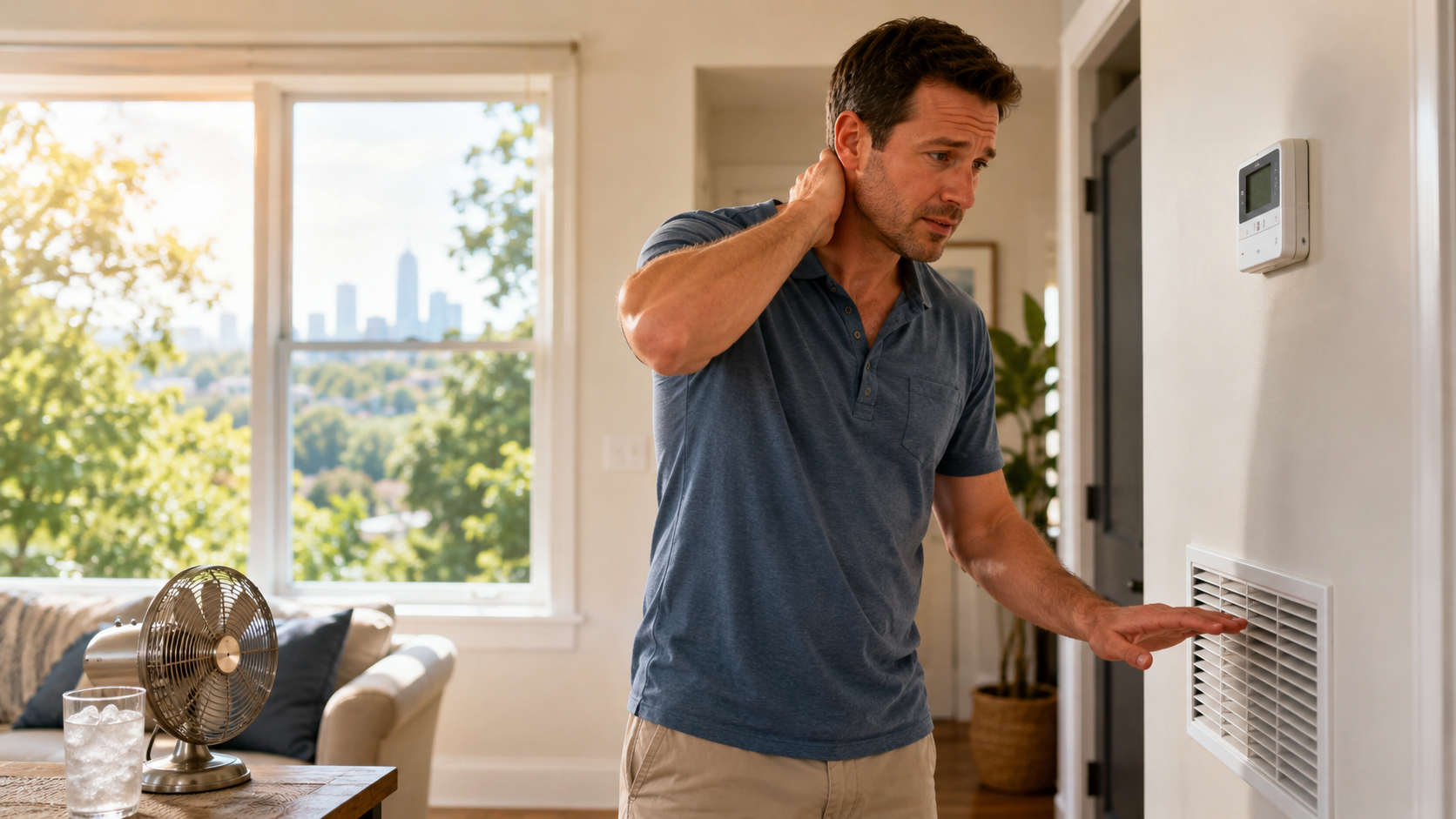
Why Is My Air Conditioner Running but Not Cooling My Atlanta Home is a common concern for homeowners and property managers across metro Atlanta. The most useful response begins with the specific symptoms, the building, and the equipment rather than a universal shortcut. This guide explains what may be happening, which basic checks are reasonable, and when professional HVAC service is the safer next step.
When airflow is present but comfort is not
An air conditioner that runs without lowering the temperature is usually struggling with airflow, heat transfer, refrigerant circulation, or system capacity. Start with the simple possibilities: confirm that the thermostat is set to Cool, lower than the current room temperature, and that the fan is set to Auto. A fan set to On can circulate room-temperature air between cooling cycles and make the vents feel warmer than expected. Then inspect the return-air filter. A heavily loaded filter restricts airflow, which can reduce cooling and contribute to ice forming on the indoor coil.
Before authorizing work, ask for the diagnosis in plain language, the recommended correction, and any alternatives. A reputable contractor should be able to explain what was observed and why the recommendation fits the system. For replacement projects, request the proposed equipment combination, scope of work, warranty information, and any duct, drain, control, or electrical changes that are included.
Common causes Atlanta homeowners encounter
Dirty outdoor coils, blocked supply registers, a failing capacitor, a weak blower motor, low refrigerant, duct leakage, and a frozen evaporator coil can all create this symptom. Atlanta heat and humidity increase the demand placed on the equipment, so a small performance problem may become obvious during a long hot afternoon. Refrigerant does not get used up like fuel. If the charge is low, the system may have a leak or may not have been charged correctly, and adding refrigerant without finding the underlying issue is not a complete repair.
Before authorizing work, ask for the diagnosis in plain language, the recommended correction, and any alternatives. A reputable contractor should be able to explain what was observed and why the recommendation fits the system. For replacement projects, request the proposed equipment combination, scope of work, warranty information, and any duct, drain, control, or electrical changes that are included.
What you can check safely
Replace a dirty filter with the size and type recommended for the system. Make sure furniture, rugs, and closed dampers are not blocking returns or supply registers. Look outside for leaves, grass, or debris packed against the condensing unit, but do not open the cabinet or spray electrical components. If you see ice on the refrigerant line or indoor equipment, turn cooling off and leave the fan on Auto or, if advised by a technician, use the fan to help the coil thaw. Continuing to operate a frozen system can worsen the problem.
Regular filter care and professional maintenance support reliable operation, but they should be matched to the building. Check filters more often during heavy use, high pollen, remodeling, or periods with pets and additional occupants. Never bypass a safety control, repeatedly reset a breaker, or keep operating equipment that smells burned, leaks heavily, or makes severe mechanical noises.
When to schedule professional service
Call for service if the system blows warm air, repeatedly trips a breaker, makes electrical buzzing sounds, produces a burning odor, leaks water, or cannot approach the thermostat setting after basic checks. A technician can measure temperature change, static pressure, electrical performance, refrigerant conditions, and airflow rather than guessing from one symptom. That diagnostic process helps distinguish a minor airflow correction from a refrigerant, electrical, or compressor problem.
Regular filter care and professional maintenance support reliable operation, but they should be matched to the building. Check filters more often during heavy use, high pollen, remodeling, or periods with pets and additional occupants. Never bypass a safety control, repeatedly reset a breaker, or keep operating equipment that smells burned, leaks heavily, or makes severe mechanical noises.
How to reduce the chance of a repeat
Change filters on an appropriate schedule, keep the outdoor unit clear, and arrange preventive maintenance before the most demanding part of summer. Maintenance cannot prevent every component failure, but it can uncover worn electrical parts, drainage issues, dirty coils, and weak airflow before the system is pushed to its limit. If the equipment is older or repair needs are becoming frequent, ask for a repair-versus-replacement comparison based on condition, comfort, efficiency, and expected ownership plans.
Before authorizing work, ask for the diagnosis in plain language, the recommended correction, and any alternatives. A reputable contractor should be able to explain what was observed and why the recommendation fits the system. For replacement projects, request the proposed equipment combination, scope of work, warranty information, and any duct, drain, control, or electrical changes that are included.
Talk with Air Systems Sales & Service
For HVAC installation, repair, or preventive maintenance in the Atlanta area, contact Air Systems Sales & Service or call (770) 377-3234. The family-owned company has served Georgia since 1995 and works with residential and commercial heating and cooling systems.
Stay Comfortable Year-Round
Contact Air Systems Sales & Services, Inc. for expert heating, cooling, and maintenance services that keep your home or business running smoothly!
Why Choose Us

Fast and Efficient Service

25+ Years of Expertise
Lower Energy, Lower Costs
Discover the Difference
Learn more about Air Systems Sales & Services, Inc. and how our trusted HVAC solutions can enhance your comfort and efficiency today!