What Causes an Air Conditioner to Freeze Up is a common concern for homeowners and property managers across metro Atlanta. The most useful response begins with the specific symptoms, the building, and the equipment rather than a universal shortcut. This guide explains what may be happening, which basic checks are reasonable, and when professional HVAC service is the safer next step.
Ice is a symptom, not extra cooling
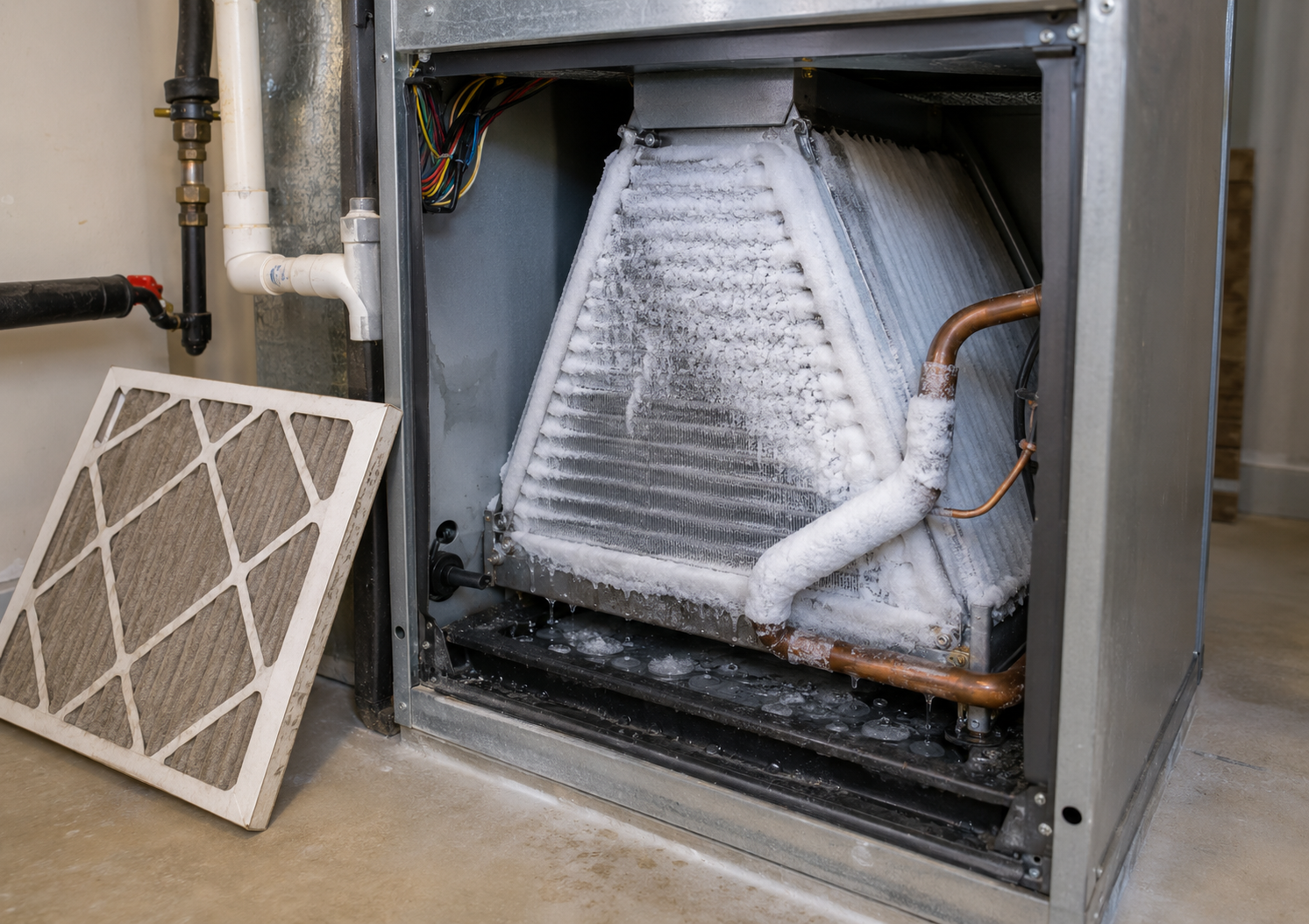
When ice appears on the refrigerant line or indoor coil, the air conditioner is not producing bonus cooling. The coil has fallen below freezing and moisture in the air has turned to ice. As the ice builds, airflow and cooling decline further. Continuing to run the compressor can worsen the condition and may contribute to damage, so the cause needs to be identified.
Regular filter care and professional maintenance support reliable operation, but they should be matched to the building. Check filters more often during heavy use, high pollen, remodeling, or periods with pets and additional occupants. Never bypass a safety control, repeatedly reset a breaker, or keep operating equipment that smells burned, leaks heavily, or makes severe mechanical noises.
Low airflow is a common cause
A clogged filter, blocked return, closed registers, dirty evaporator coil, weak blower, or duct restriction can reduce the amount of warm indoor air moving across the coil. Without enough heat transfer, coil temperature can fall too low. Check the filter and accessible registers, but remember that internal coil or blower problems require professional service.
Regular filter care and professional maintenance support reliable operation, but they should be matched to the building. Check filters more often during heavy use, high pollen, remodeling, or periods with pets and additional occupants. Never bypass a safety control, repeatedly reset a breaker, or keep operating equipment that smells burned, leaks heavily, or makes severe mechanical noises.
Refrigerant and control problems
Low refrigerant pressure caused by a leak or incorrect charge can also contribute to freezing. Refrigerant should be measured and handled by a qualified technician; simply adding more without addressing a leak is not a lasting solution. Thermostat, sensor, metering-device, or outdoor-condition issues can also be involved. Diagnosis should use operating measurements rather than assumptions based only on visible ice.
Regular filter care and professional maintenance support reliable operation, but they should be matched to the building. Check filters more often during heavy use, high pollen, remodeling, or periods with pets and additional occupants. Never bypass a safety control, repeatedly reset a breaker, or keep operating equipment that smells burned, leaks heavily, or makes severe mechanical noises.
What to do when you find ice
Turn cooling off. Avoid chipping ice, using sharp tools, or applying high heat to the coil. Depending on the situation, allowing the indoor fan to circulate air may help thawing, but follow service guidance and protect the area from condensate as the ice melts. Replace a visibly dirty filter if it can be done safely. Do not restart cooling until the system is fully thawed, and arrange service if freezing returns.
Before authorizing work, ask for the diagnosis in plain language, the recommended correction, and any alternatives. A reputable contractor should be able to explain what was observed and why the recommendation fits the system. For replacement projects, request the proposed equipment combination, scope of work, warranty information, and any duct, drain, control, or electrical changes that are included.
Preventing another freeze-up
Use the correct filter, maintain clear returns and registers, and schedule regular HVAC maintenance. If airflow is chronically weak, ask for static-pressure and duct evaluation. Air Systems Sales & Service can inspect Atlanta cooling systems for airflow, coil, blower, refrigerant, and control issues. Correcting the root cause restores performance more reliably than repeatedly thawing and restarting the equipment.
Before authorizing work, ask for the diagnosis in plain language, the recommended correction, and any alternatives. A reputable contractor should be able to explain what was observed and why the recommendation fits the system. For replacement projects, request the proposed equipment combination, scope of work, warranty information, and any duct, drain, control, or electrical changes that are included.
Talk with Air Systems Sales & Service
For HVAC installation, repair, or preventive maintenance in the Atlanta area, contact Air Systems Sales & Service or call (770) 377-3234. The family-owned company has served Georgia since 1995 and works with residential and commercial heating and cooling systems.
Stay Comfortable Year-Round
Contact Air Systems Sales & Services, Inc. for expert heating, cooling, and maintenance services that keep your home or business running smoothly!
Why Choose Us

Fast and Efficient Service

25+ Years of Expertise
Lower Energy, Lower Costs
Discover the Difference
Learn more about Air Systems Sales & Services, Inc. and how our trusted HVAC solutions can enhance your comfort and efficiency today!